KYOTO >
Kyoto rewards the traveller who leaves room between the famous places. Choose a garden for the way it frames a view, a museum for the relationship between its rooms and its collection, or a café because an old bathhouse has found a useful second life. The city becomes more interesting when the building, the object and the everyday experience are considered together.
This ALMANAK Kyoto guide brings art, architecture and neighbourhood walks into the same conversation as hotels, restaurants, coffee and music. The selection runs from imperial gardens to contemporary craft shops, with record stores and late-night rooms given their own place in the itinerary. Use it to build a day around a few deliberate choices, not to collect every address.
There are 77 recommendations across ten destination sections, followed by five locality-led walking trails. Opening days, exhibitions, reservations and access arrangements can change, so confirm directly before setting out.
KNOW > Before setting out
Walking times are approximate. A nearby or useful station is identified where the closest station could not be confirmed; neighbourhoods have suggested starting points rather than one definitive arrival station. Google Maps links are name-and-address searches, not verified entrance pins.
ART > Museums, Galleries and Artist's Houses
Kyoto City KYOCERA Museum of Art
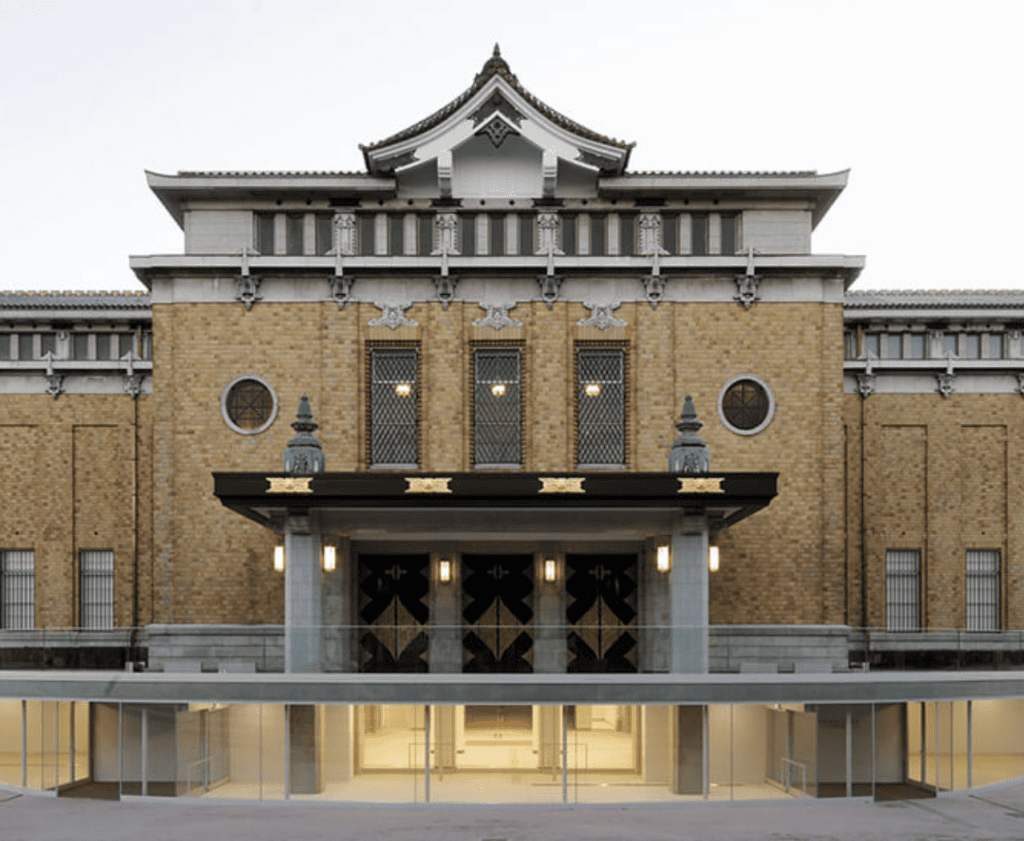
Start here for Kyoto’s conversation between old and new. Jun Aoki and Tezzo Nishizawa’s renewal keeps the civic grandeur of the 1933 museum but changes the way it meets the city: a lowered entrance, a glass ribbon and light-filled new spaces make the historic building feel newly accessible.
Architecture / design: Historic Crown Imperial architecture with a contemporary intervention by Jun Aoki and Tezzo Nishizawa. (Museum architecture, Museum access)
Address / area: 124 Okazaki Enshoji-cho, Sakyo-ku, Kyoto 606-8344.
Phone: 075-771-4334.
Closest / useful rail: Higashiyama, Tozai subway line; approximately 8 minutes on foot. (Museum architecture, Museum access)
Website |
Google Map Link |
Instagram |
The National Museum of Modern Art, Kyoto | MoMAK
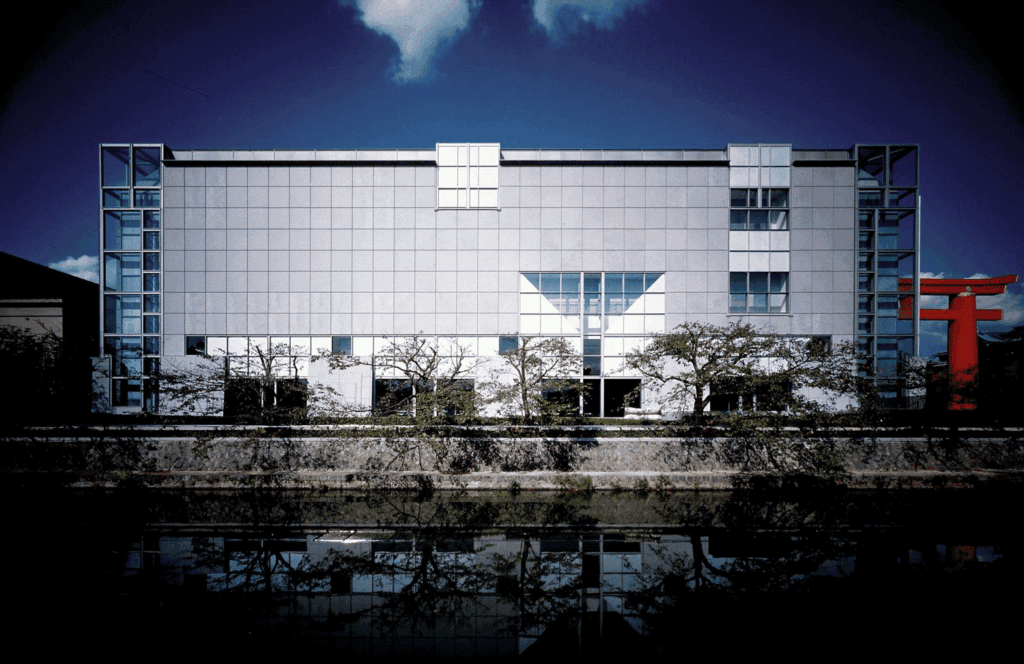
The useful counterpoint to Kyoto’s temples and historic collections. Painting sits alongside ceramics, photography and design, with particular attention to Kyoto and the wider Kansai region. Come for the exhibition on the calendar rather than assuming that every celebrated work in the collection will be on display.
Address / area: 26-1 Okazaki Enshoji-cho, Sakyo-ku, Kyoto 606-8344.
Phone: 075-761-4111.
Closest / useful rail: Higashiyama, Tozai subway line; approximately 10 minutes on foot. (Kyoto museum directory,
MoMAK access)Website · Google Maps search · Instagram.
Kyoto National Museum
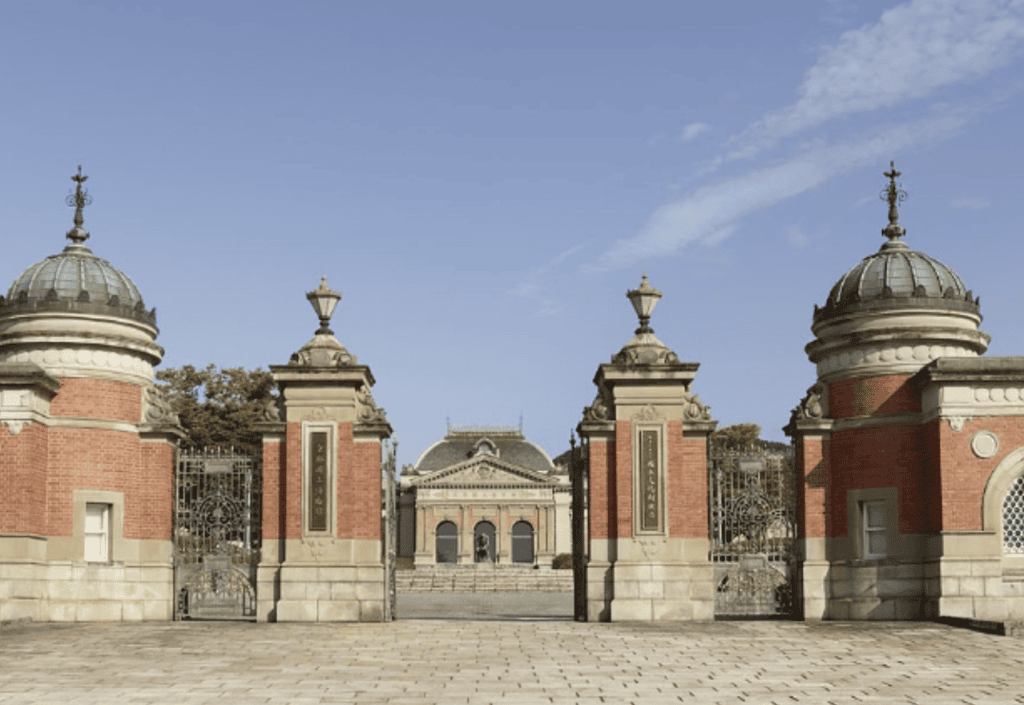
A place to give Kyoto’s Buddhist sculpture, textiles and decorative arts some historical context. The architectural contrast is part of the visit: Katayama Tokuma’s red-brick Meiji hall and Yoshio Taniguchi’s restrained Heisei Chishinkan wing represent very different ideas of a national museum. The older hall is not normally open inside. (Museum buildings, Art Tourism Japan, Museum access)
Architecture / design: Katayama Tokuma’s Meiji Kotokan and Yoshio Taniguchi’s Heisei Chishinkan. (Museum buildings, Art Tourism Japan, Museum access)
Address / area: 527 Chaya-cho, Higashiyama-ku, Kyoto 605-0931.
Phone: 075-525-2473 (telephone information service).
Closest / useful rail: Shichijo, Keihan Main Line; approximately 7 minutes on foot. (Museum buildings, Art Tourism Japan, Museum access)Website · Google Maps search · Instagram.
Before visiting: Do not plan on entering the Meiji Kotokan: the museum reports its normal closure for seismic reasons. Check the current exhibition and building-access notices. (Museum buildings, Art Tourism Japan, Museum access)
Fukuda Art Museum
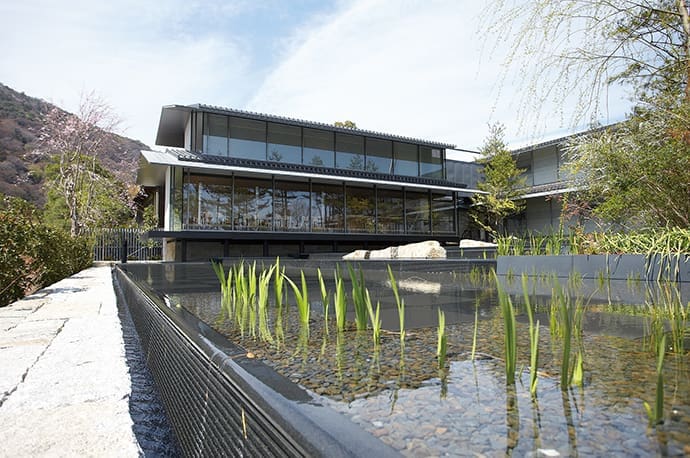
An Arashiyama museum that makes the landscape part of the viewing experience. Paintings are housed in a contemporary interpretation of Kyoto’s storehouses and engawa verandas, with patterned glass and a reflective pool softening the boundary between gallery and garden. Allow time for the setting rather than treating it as a quick indoor diversion. (Museum concept, Museum access, Kyoto museum directory)
Architecture / design: Machiya and storehouse references, basket-pattern glazing and a water garden. (Museum concept, Museum access, Kyoto museum directory)
Address / area: 3-16 Saga Tenryuji Susukinobaba-cho, Ukyo-ku, Kyoto.
Phone: 075-863-0606.
Closest / useful rail: Arashiyama, Randen line; approximately 4 minutes on foot. (Museum concept, Museum access, Kyoto museum directory)Website · Google Maps search · Instagram.
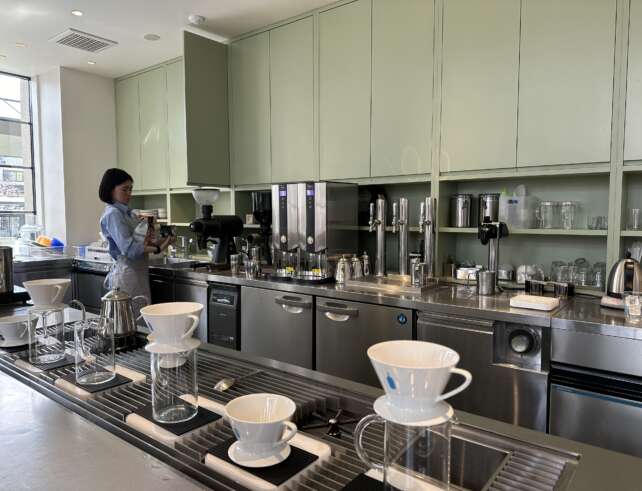
CAFE > Blue Bottle, Kyoto
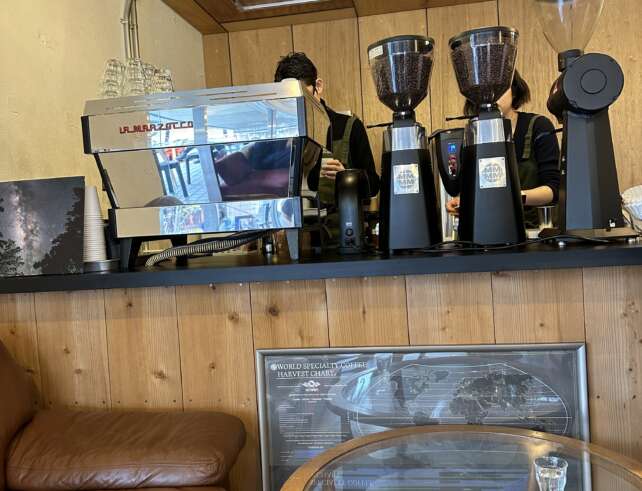
CAFE > Goodman Roaster, Kyoto
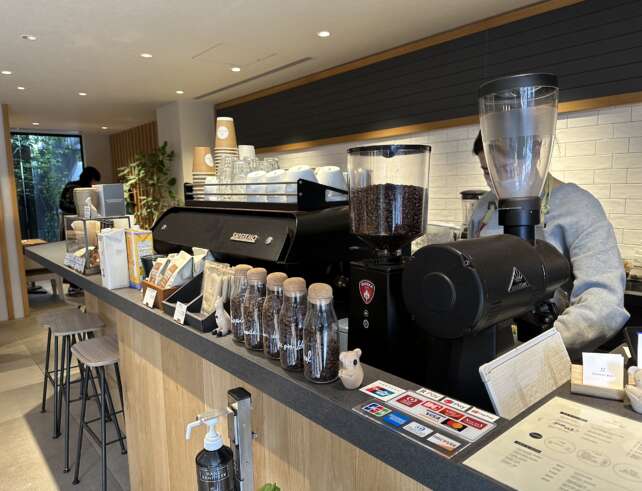
CAFE > Common Well, Kyoto