Share This Article
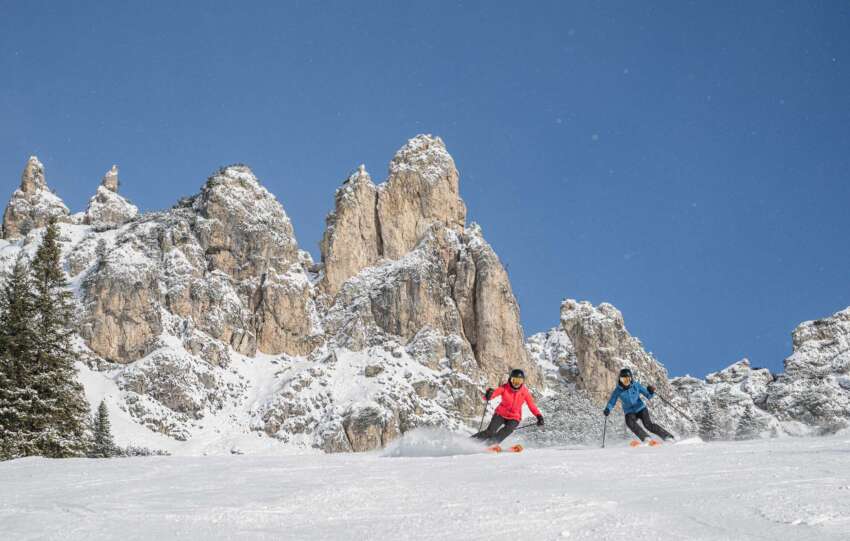
The Dolomites is one of the very best places in the world to ski (well it does depend on what you want from a ski holiday). Stunning scenery, wonderful long runs, exceptional food options and of course it was host to the recent winter Olympics.
Cortina d’Ampezzo is the Dolomites’ grande dame: a stylish, cliff‑ringed amphitheatre of pistes, couloirs and rifugi that sits inside the Dolomiti Superski universe yet keeps its own orbit. It’s best thought of as three main ski areas plus satellites, linked by bus rather than lifts to the broader network, which shapes everything from your morning routine to which pass makes sense.
HOW TO GET THERE >
Most international skiers will route via Venice, then push north into the Ampezzo valley by road or a train‑plus‑bus combo. The classic move is to fly into Venice Marco Polo, take a regional train towards Calalzo di Cadore or Longarone–Zoldo, then connect onto a Dolomitibus service up to Cortina in around three to three‑and‑a‑half hours all‑in.
If you prefer minimal changes, dedicated coaches run directly from Venice Piazzale Roma or Mestre to Cortina d’Ampezzo, with Cortina Express and FlixBus both covering the route in roughly 2.5–3 hours depending on traffic and snow.
Self‑drivers can follow the A27 towards Belluno and onward into the valley, with the final approach delivering that cinematic reveal of vertical limestone walls, frozen waterfalls and the town’s church spire framed against Tofana.
STAY >
Cortina’s accommodation skews refined rather than raucous, with a run of heritage hotels and contemporary design addresses strung along Corso Italia and the side streets fanning out towards the slopes. You’ll find traditional alpine grande dames with wood‑panelled lounges and white‑jacketed service alongside modern, wellness‑centric hotels that lean hard into natural materials, big windows and expansive spas for post‑Tofana recovery.
Staying in or just off the pedestrian core keeps you within an easy stroll of shops, bars and the ski bus stops that shuttle you to Tofana, Faloria–Cristallo and Cinque Torri/Lagazuoi each morning. Further out, chalets, B&Bs and rifugi push you closer to specific lifts or into quieter pockets, trading nightlife for pre‑dawn views of the Dolomite towers glowing pink above the valley.
EAT >
On‑mountain, Cortina is laced with rifugi that take long lunch as seriously as any black run, with wooden terraces, sheepskins and menus that swing from polenta with game to more refined, Michelin‑aware plates. The food culture is a genuine highlight of skiing here: it’s completely normal to structure your day around a rifugio reservation, timing laps off Faloria or Cinque Torri to drop into a particular hut for slow‑cooked stews, tagliatelle with local mushrooms or ricotta‑heavy desserts.
In town, the dining scene runs from classic trattorie and pizzerie to destination restaurants that attract a weekend Milanese crowd, all backed by excellent local produce and Alto Adige wine lists. Hotel restaurants are worth a look in their own right—several properties have invested heavily in kitchens and cellar programs—so you can easily alternate between cosy, wood‑smoked comfort food one night and tasting‑menu polish the next.
DRINK >
Cortina’s après is more polished aperitivo than table‑dancing mayhem, with a ritual that kicks off as the last lifts spin and the town’s bars and hotel lounges fill with fur‑collared jackets and Aperol spritzes. Many hotels feature well‑stocked bars where you can work through local amari, Italian gins and a serious Italian/French sparkling lineup in front of picture windows or fireplaces before dinner.
There are livelier spots near Corso Italia where younger skiers and boarders cluster over beers and negroni, but the overall tone stays more chic than chaotic and wind‑down tends to come earlier than in, say, Austrian party hubs. On‑mountain, a final bombardino or grappa at a rifugio terrace—sun dropping behind Tofana or the Cinque Torri—is the quintessential Cortina last run.
TERRAIN >
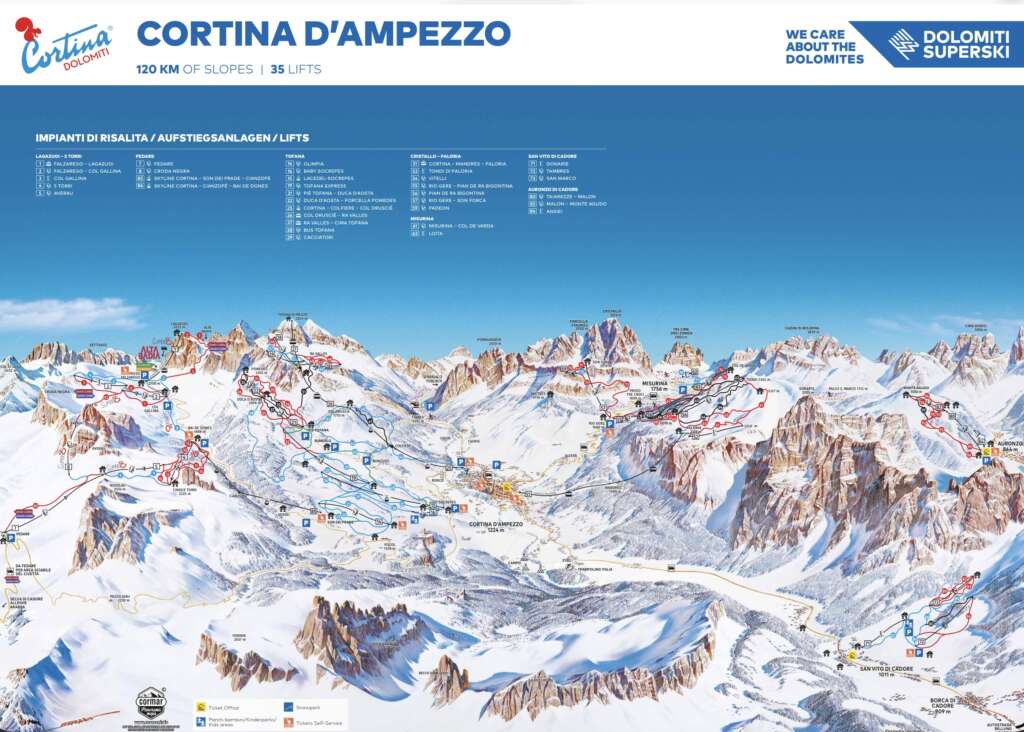
Cortina’s skiing is spread across three main sectors—Tofane, Faloria–Cristallo and Cinque Torri/Lagazuoi—plus smaller satellites, giving it a distinctive, multi‑face character rather than a single valley feel. Across the whole Cortina area you’re looking at roughly 120–140 km of pistes and more than 40 lifts, with elevations pushing up towards 2,828–2,835 m on Tofana and Lagazuoi, which helps snow quality and views.
- Tofane: The flagship front, rising directly above town with long, groomed reds and blacks, World Cup pistes and a good mix of lower‑mountain beginner terrain around Socrepes and Lacedel.
- Faloria–Cristallo: Accessed from the opposite side of the valley, this sector offers high, cold‑holding slopes and some of Cortina’s best corduroy for intermediates and advanced skiers who love fast, carving laps.
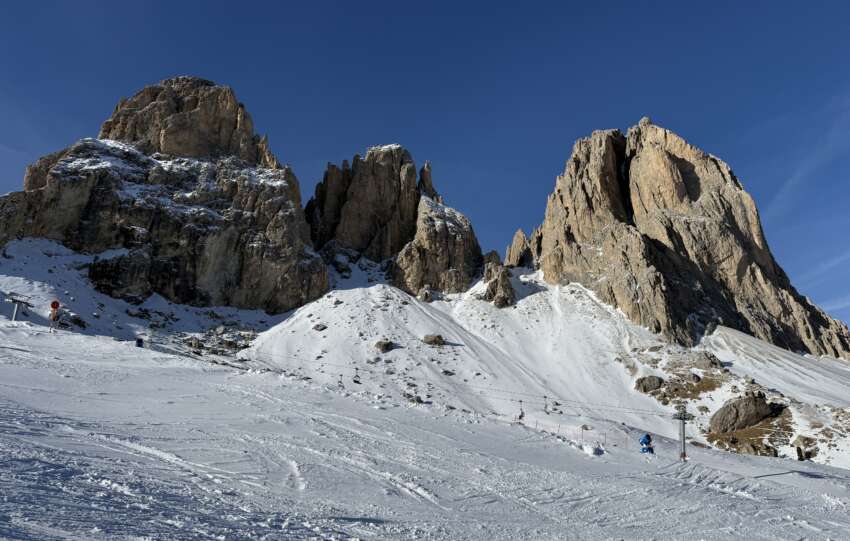
- Cinque Torri–Lagazuoi: Smaller in pure piste kilometres but huge in atmosphere, this area delivers rolling tree‑lined runs, sun‑catching bowls and access to the famed Lagazuoi summit and its long descents towards Alta Badia and the Armentarola run.
Off‑piste, Cortina is famous for its couloirs and steep lines dropping off Tofana and around the Cristallo massif, but much of this is serious terrain where hiring a UIAGM‑qualified guide is non‑negotiable. Beginners are best anchored around the lower Tofane/Socrepes slopes, where dedicated learning areas, magic carpets and gentle gradients create a contained, confidence‑building environment away from the faster traffic above.
Dolomiti Superski connections
Cortina is one of 12 valleys in the Dolomiti Superski system, which collectively offers around 1,200 km of slopes and a single pass that covers them all. Within that macro‑map, Cortina’s three main ski areas are lift‑linked to each other only in clusters (for example, Tofane areas interconnect; Faloria and Cristallo are linked; Cinque Torri and Lagazuoi tie together), and are joined to town and to each other primarily by ski bus.
Crucially, Cortina is not lift‑connected directly into the central Sella Ronda carousel, so accessing Alta Badia, Corvara or other Dolomiti Superski hubs is a matter of combining road transfers with your skis, rather than gliding there via pistes alone. From the Averau/Cinque Torri/Lagazuoi side, strong skiers can use the Lagazuoi–Armentarola link and onward buses to dip into Alta Badia on a full‑day safari, but it’s an expedition rather than a casual connection.
As one of the twin hosts of the Milano Cortina 2026 Winter Olympics, Cortina d’Ampezzo has stepped back into the global spotlight it first enjoyed during the 1956 Games, this time as part of a far more expansive, multi‑cluster event spread across northern Italy. The Tofane Alpine Skiing Centre above town staged women’s alpine events across February, while the reimagined Cortina Curling Olympic Stadium in the valley and the new Cortina Sliding Centre handled curling, bobsleigh, luge and skeleton, anchoring a dedicated Cortina “cluster” within the wider Dolomiti Superski region. For skiers, that means familiar pistes and venues now carry an extra layer of Olympic mythology—world‑cup‑proven race slopes, broadcast‑ready infrastructure and a town atmosphere that, for a few intense weeks in 2026, blended everyday Dolomite ski life with the security cordons, athletes’ buses and multilingual fan zones of a modern Winter Games.
PLAY >
On‑snow, Cortina excels at long, scenic laps that mix wide groomers with dramatic limestone backdrops, with each sector offering its own “mini‑universe” to explore for a day or two at a time. Tofane is the natural choice for mixed‑ability groups and families, thanks to easy access from town, strong ski‑school presence and a spread of pistes from green to World Cup black, while Faloria–Cristallo will appeal to intermediates and experts who want to spend hours working through different fall lines without repeating the same run too often.
Guided experiences unlock a different Cortina: off‑piste couloirs, multi‑area itineraries that combine Cortina with nearby Dolomiti Superski valleys in a single day, and curated hut‑to‑hut lunches that turn skiing into a progressive tasting menu. Off the mountain, winter hiking, fat‑biking, ice skating and spa time round out non‑ski days, while the town itself rewards unhurried strolls between boutiques, galleries and pasticcerie.
TICKET/PASSES >
Lift passes are sold in two broad flavours: a local Cortina d’Ampezzo pass that covers all three main ski areas above town plus the smaller nearby zones (Auronzo, San Vito di Cadore), and the full Dolomiti Superski pass that opens up all 12 valleys and some 460 lifts. For most skiers on a short stay anchored solely in Cortina, the local pass is the pragmatic choice, giving more than enough terrain to fill a week without paying for lift systems you’re unlikely to reach.
Indicative 2025–26 pricing for the Cortina area pass sits around €86 for a single adult day and €436 for six consecutive days, with scaled reductions for seniors, juniors and young children. The Dolomiti Superski option costs more but makes sense if you have your own car or plan a longer stay that includes day trips to Alta Badia, Val Gardena or other sectors; it also buys the psychological freedom to follow the best weather and snow forecasts across the wider region.
Skipass and local contact:
- Cortina SkiWorld / Skipass Office, Via Marconi 15, 32043 Cortina d’Ampezzo (BL), Italy.
- Tel: +39 0436 862171; Email: info@skipasscortina.com.
- Web: skipasscortina.com (Cortina & Dolomiti Superski pass info).
Based on the surrounding ski areas around Cortina d’Ampezzo, here is a comprehensive comparison table of terrain features across the three main ski areas: Tofana, Faloria–Cristallo, and 5 Torri–Lagazuoi.
| Feature | Tofana | Faloria–Cristallo | 5 Torri–Lagazuoi |
|---|---|---|---|
| Elevation Top | 2,828 m | 2,930 m | 2,752 m |
| Elevation Bottom | 1,224 m | 1,224 m | 1,822 m |
| Vertical Drop | 1,604 m | 1,706 m | 930 m |
| Skiable Terrain | Part of 120 km total | Part of 120 km total | Part of 120 km total |
| Longest Run | 11 km (Tofana to Cortina) | Not specified | 8.5 km (Armentarola) |
| Beginner | 19 blue slopes | 2 blue slopes | 7 blue slopes |
| Intermediate | 12 red slopes | 8 red slopes | 9 red slopes |
| Advanced | 6 black slopes | 5 black slopes | 0 black slopes |
| Lifts | 11 (1 gondola, 1 cable car, 9 chairlifts) | 7 (1 cable car, 5 chairlifts, 1 ski lift) | 7 (1 cable car, 5 chairlifts, 1 ski lift) |
| Snowmaking | 95% coverage across resort | 95% coverage across resort | 95% coverage across resort |
| Snowpark | Yes (Cortina Snowpark, 500m) | No | No |
Area Characteristics
Tofana is Cortina’s largest ski area, offering the most diverse terrain with extensive beginner zones at Socrepes and Pocol, plus challenging expert runs like the famous Canalone and Schuss. It features the longest continuous descent in the resort at 11 kilometers with 1,611 meters of vertical drop.
Faloria–Cristallo reaches the highest elevation at 2,930 meters and provides primarily advanced and intermediate terrain. This area includes the notorious Forcella Staunies, one of the steepest runs in the Dolomiti Superski region with a gradient of 64-68%.
5 Torri–Lagazuoi emphasizes scenic intermediate cruising with no black runs, making it ideal for confident intermediates and those seeking picturesque skiing. The signature Armentarola run at 8.5 kilometers is considered a must-ski experience in the Dolomites.
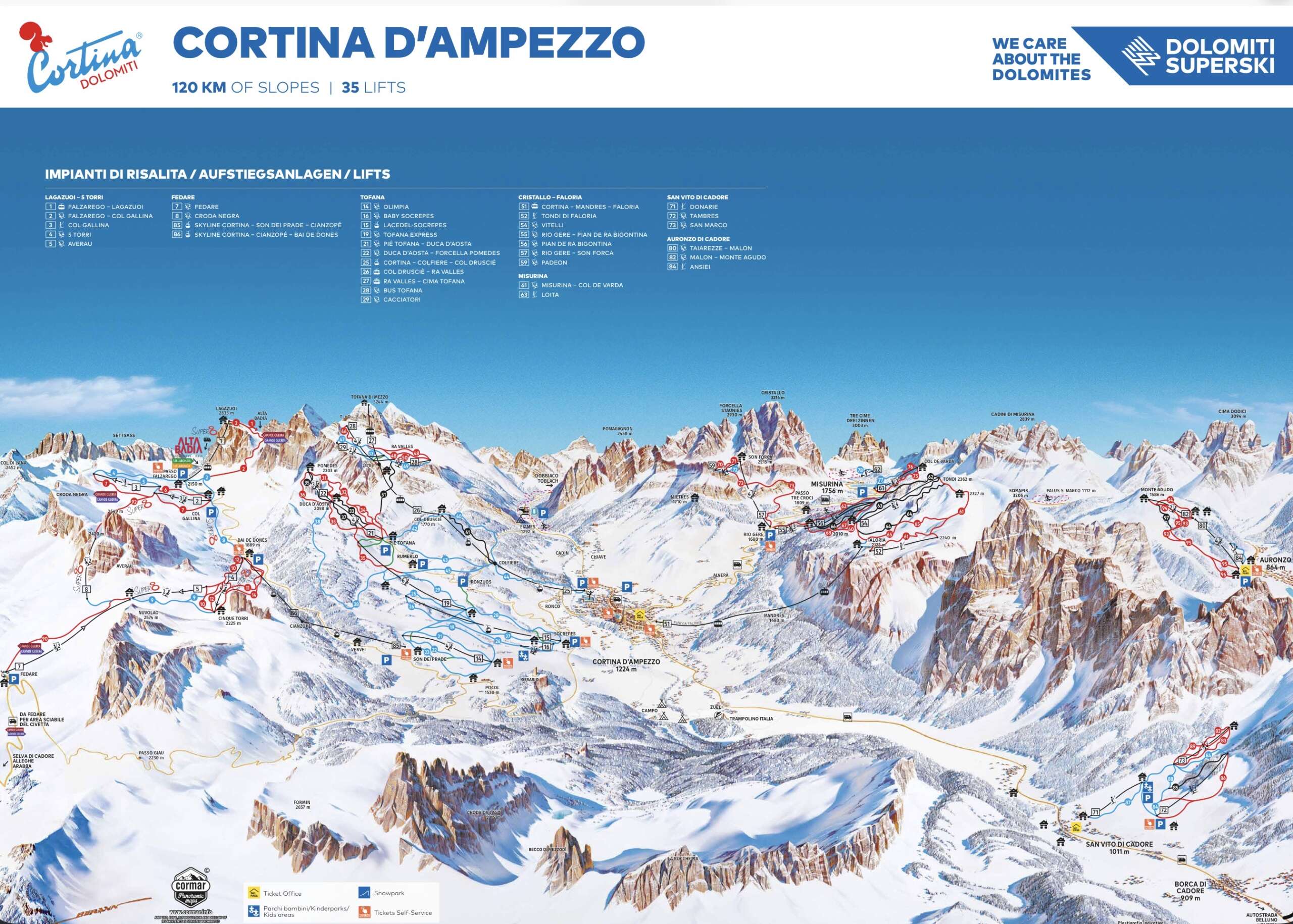
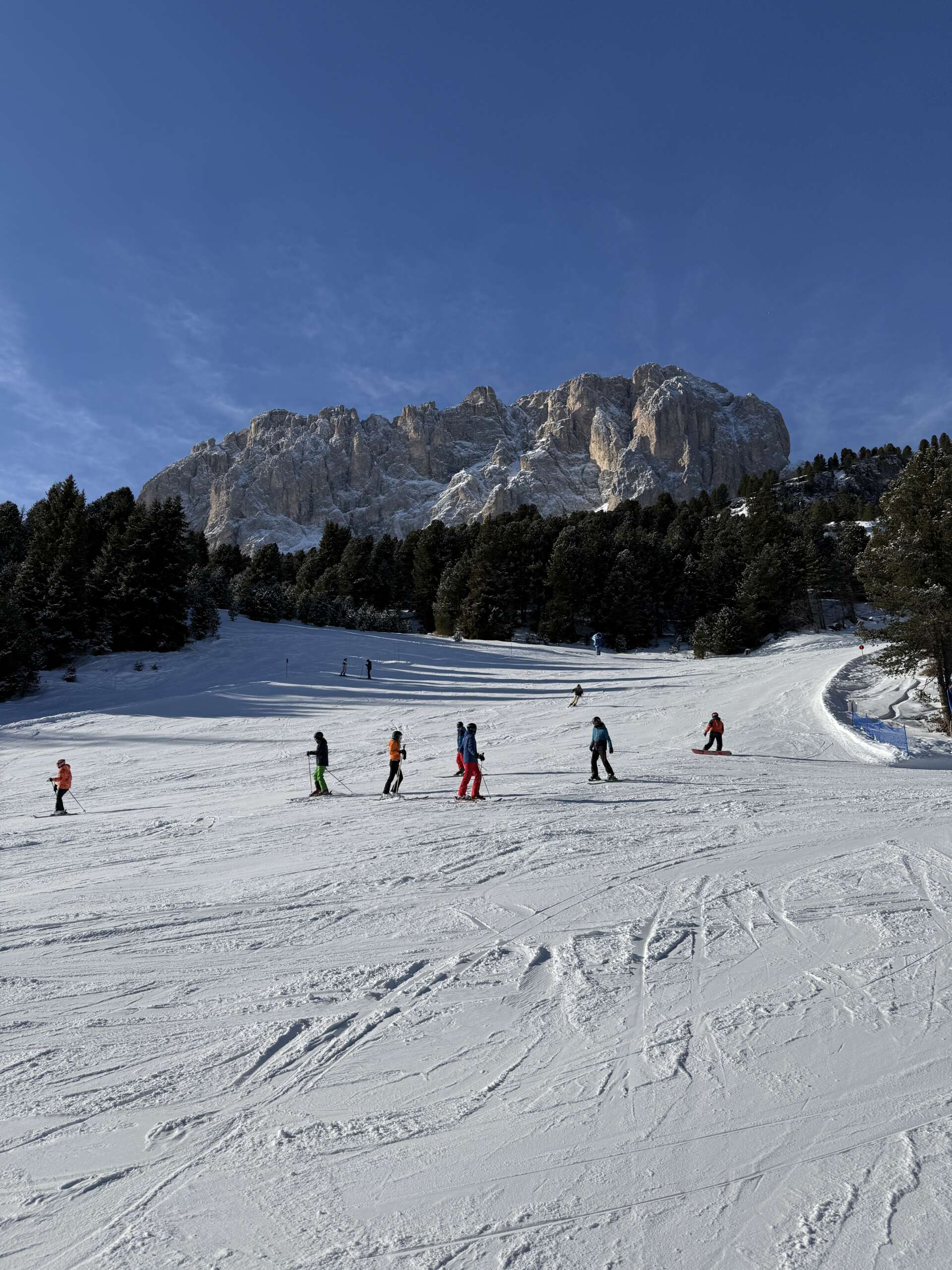
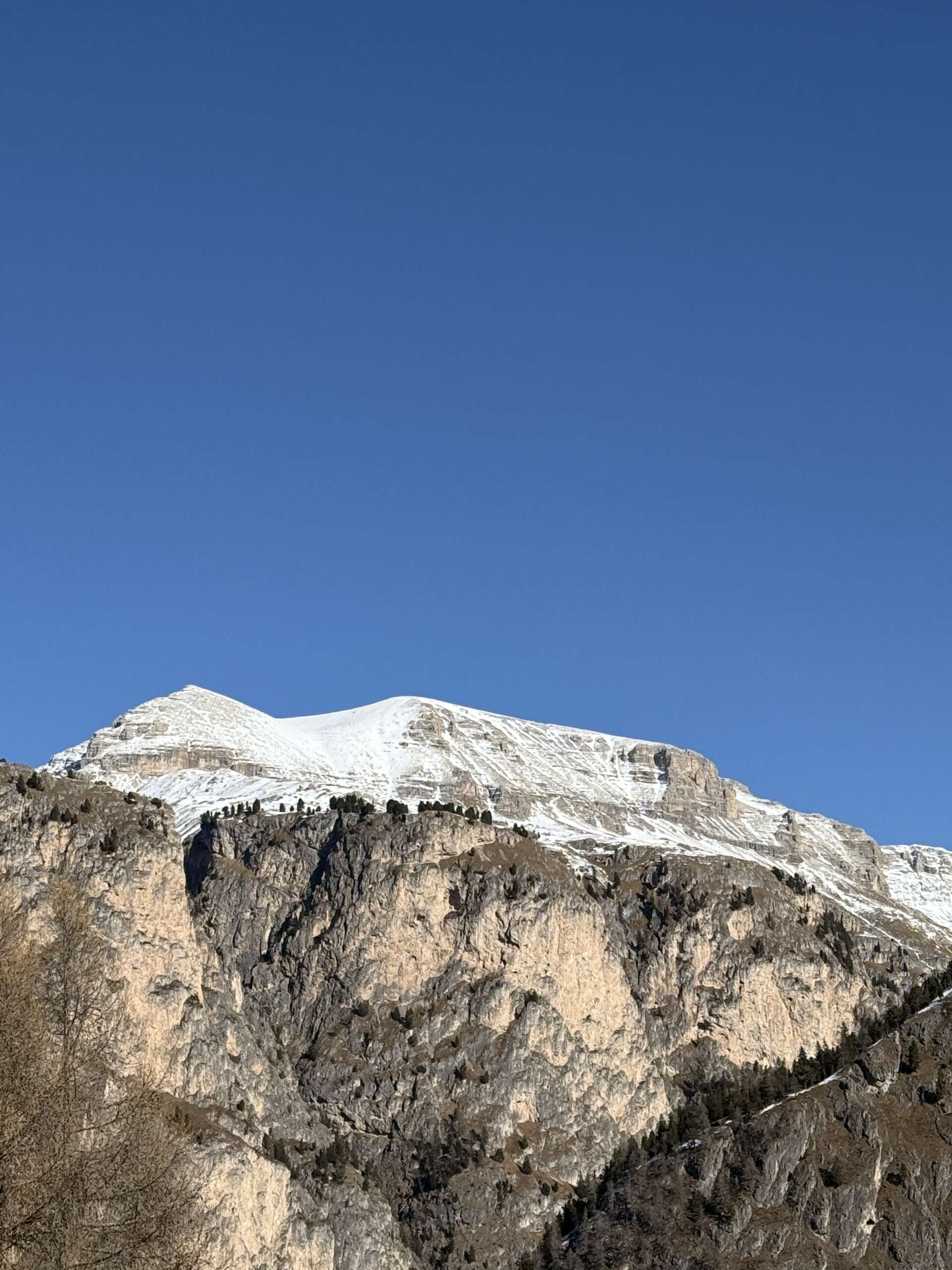
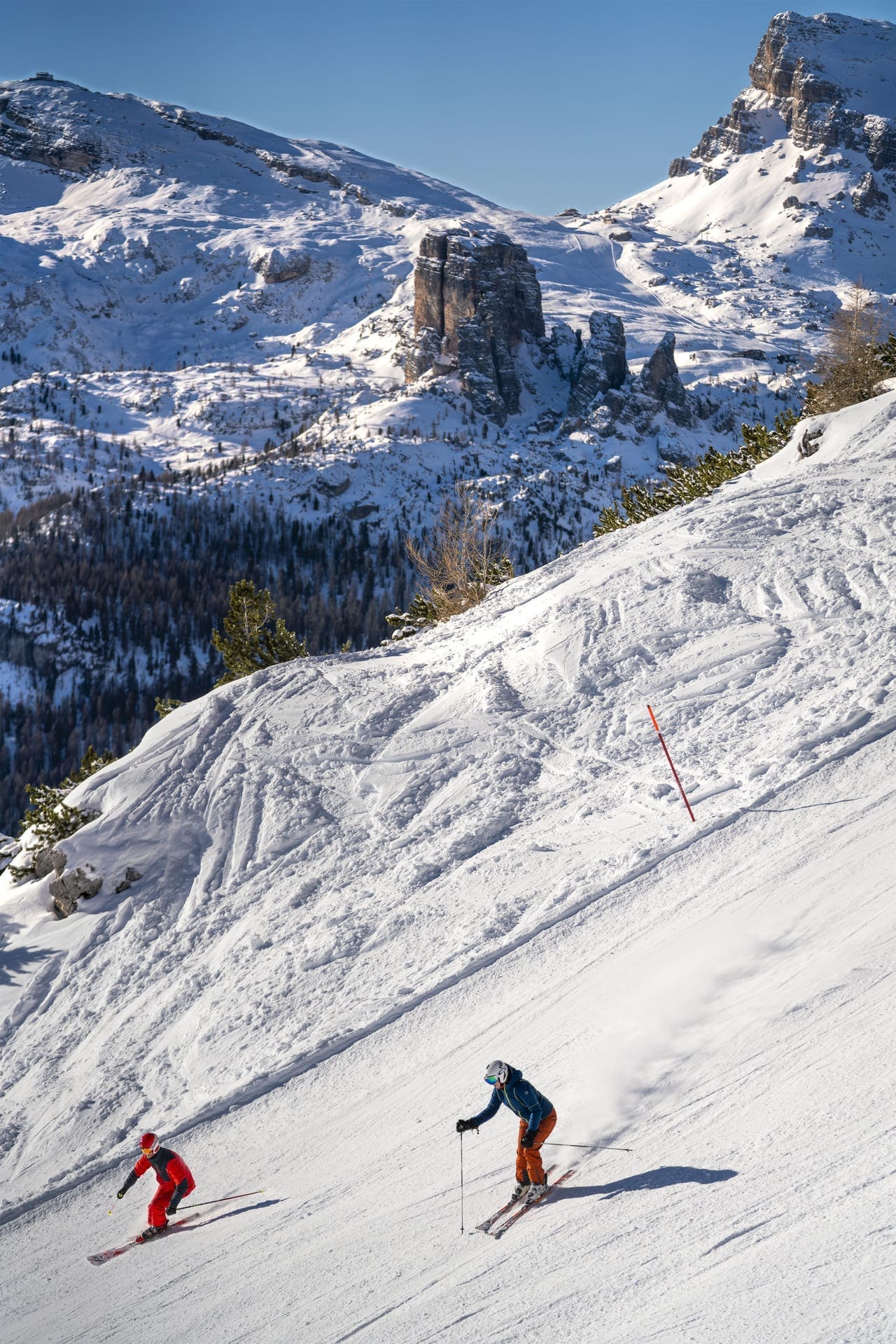
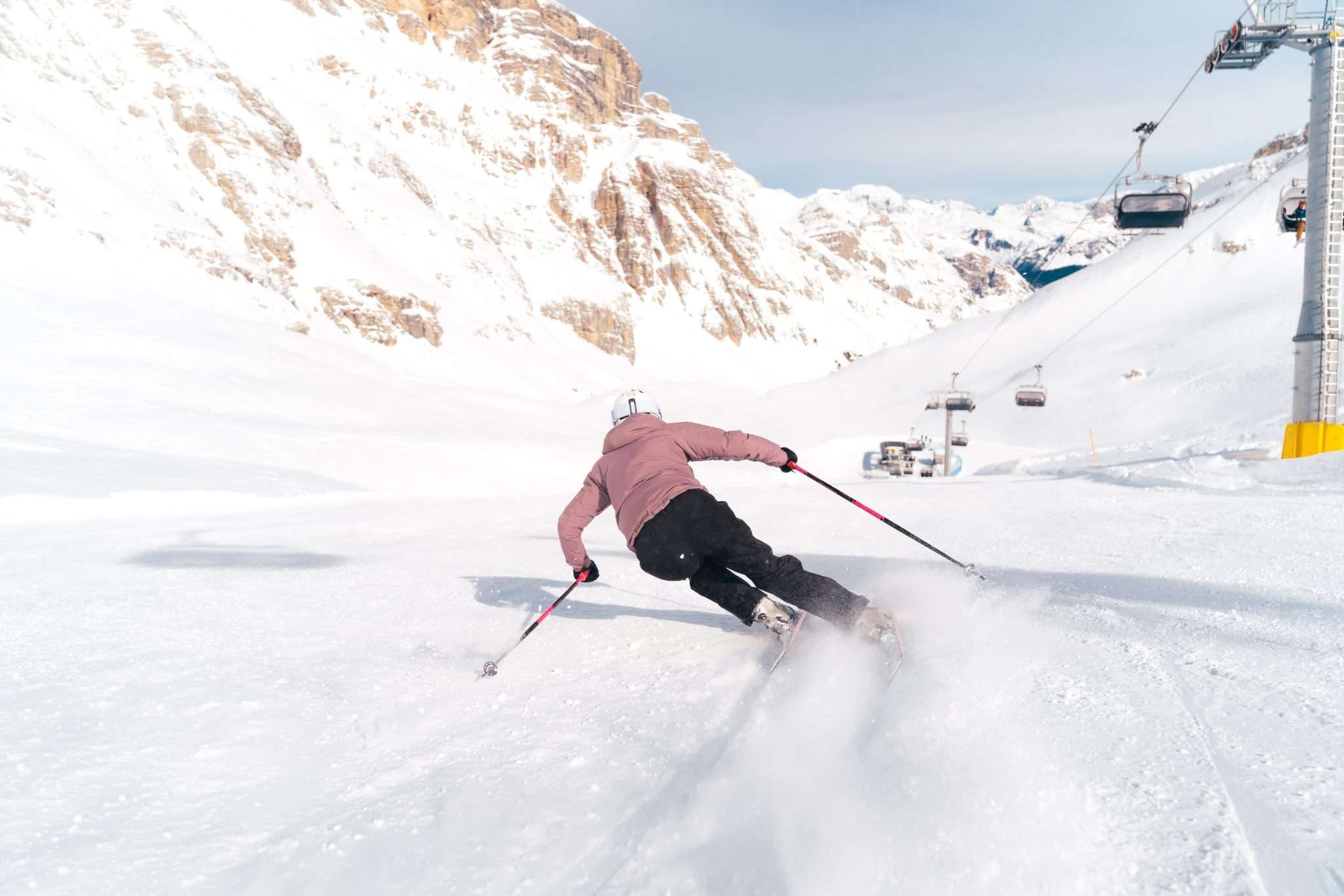
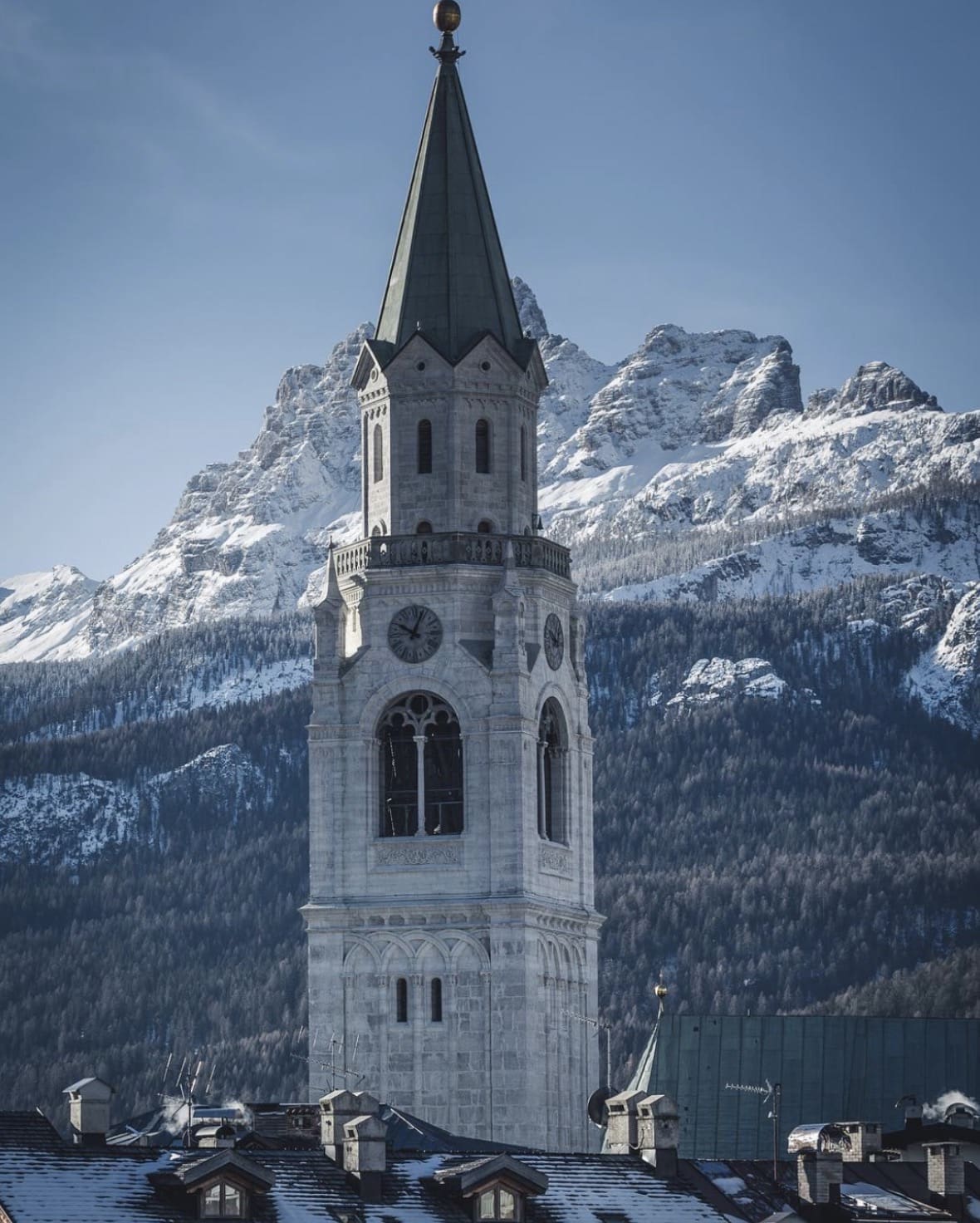
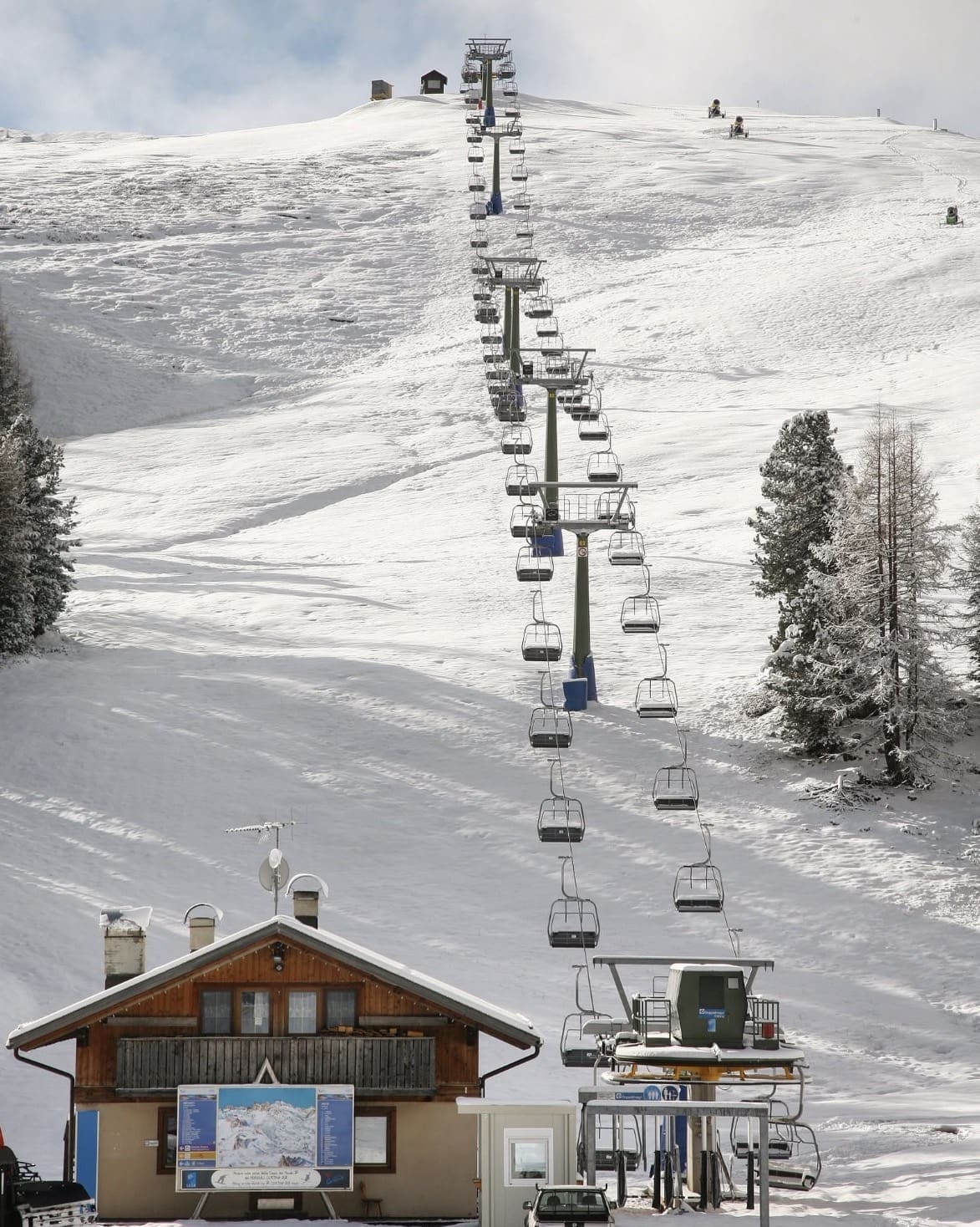
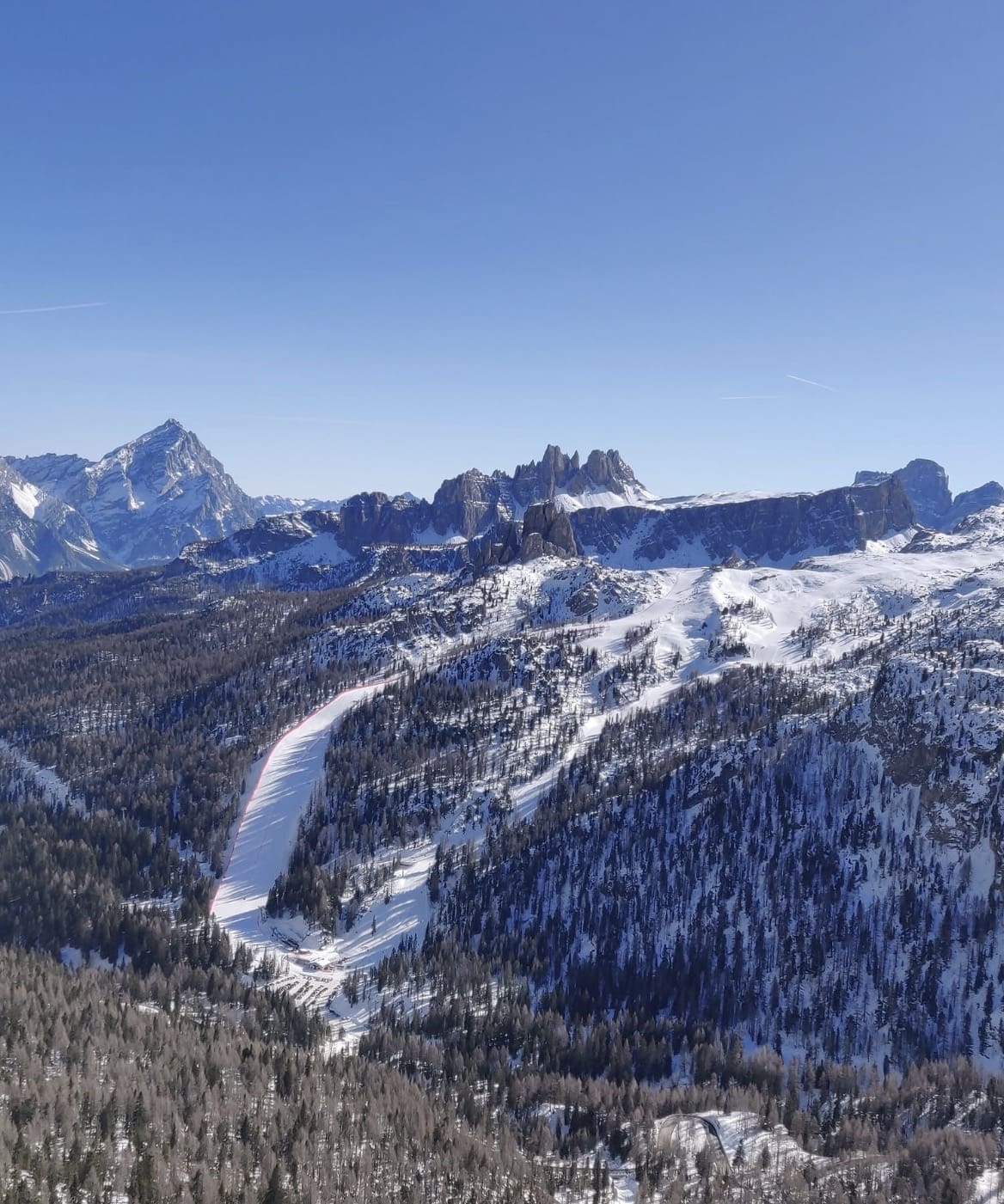
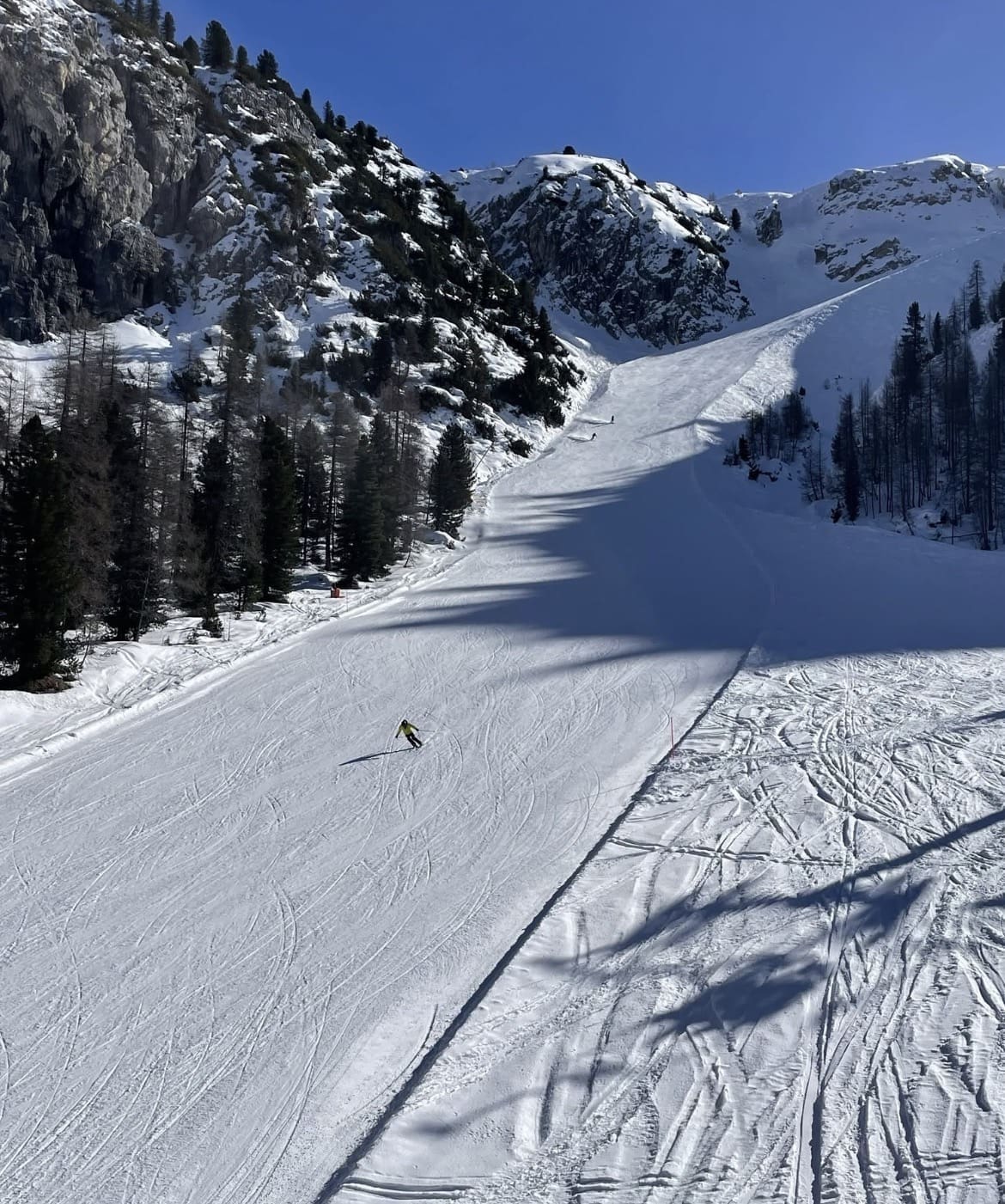
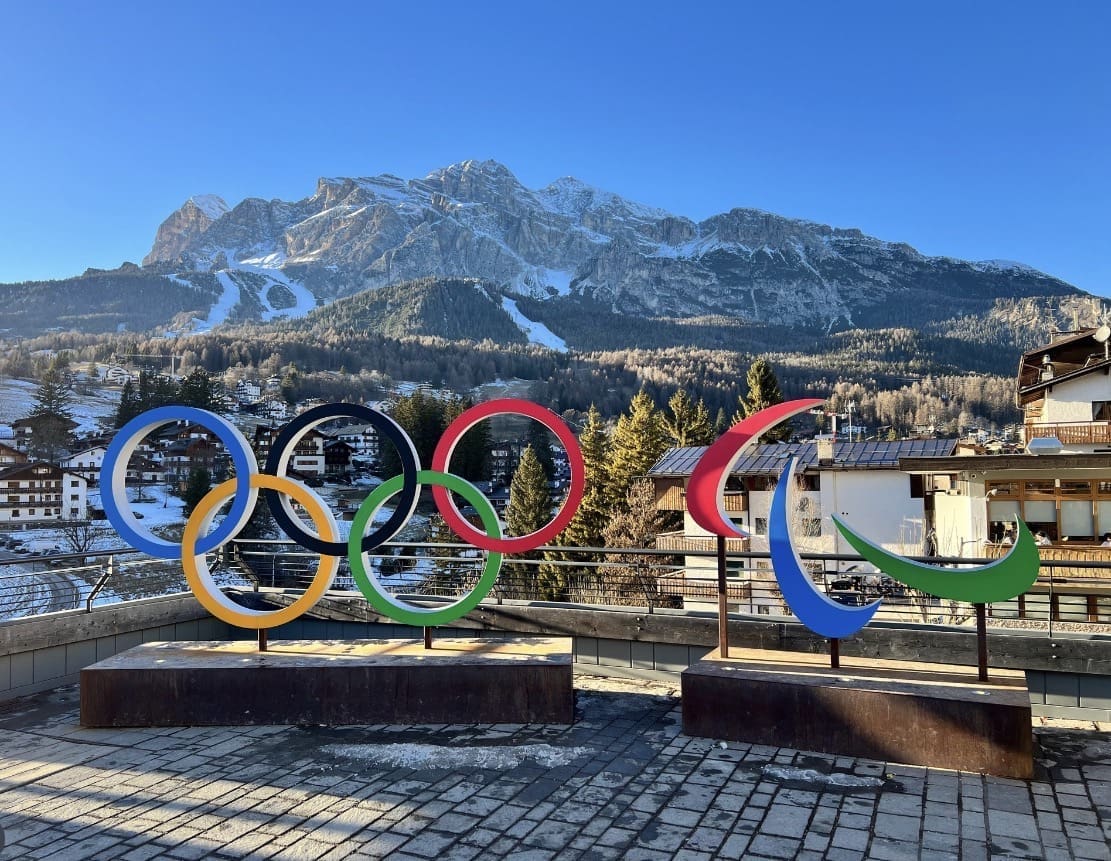
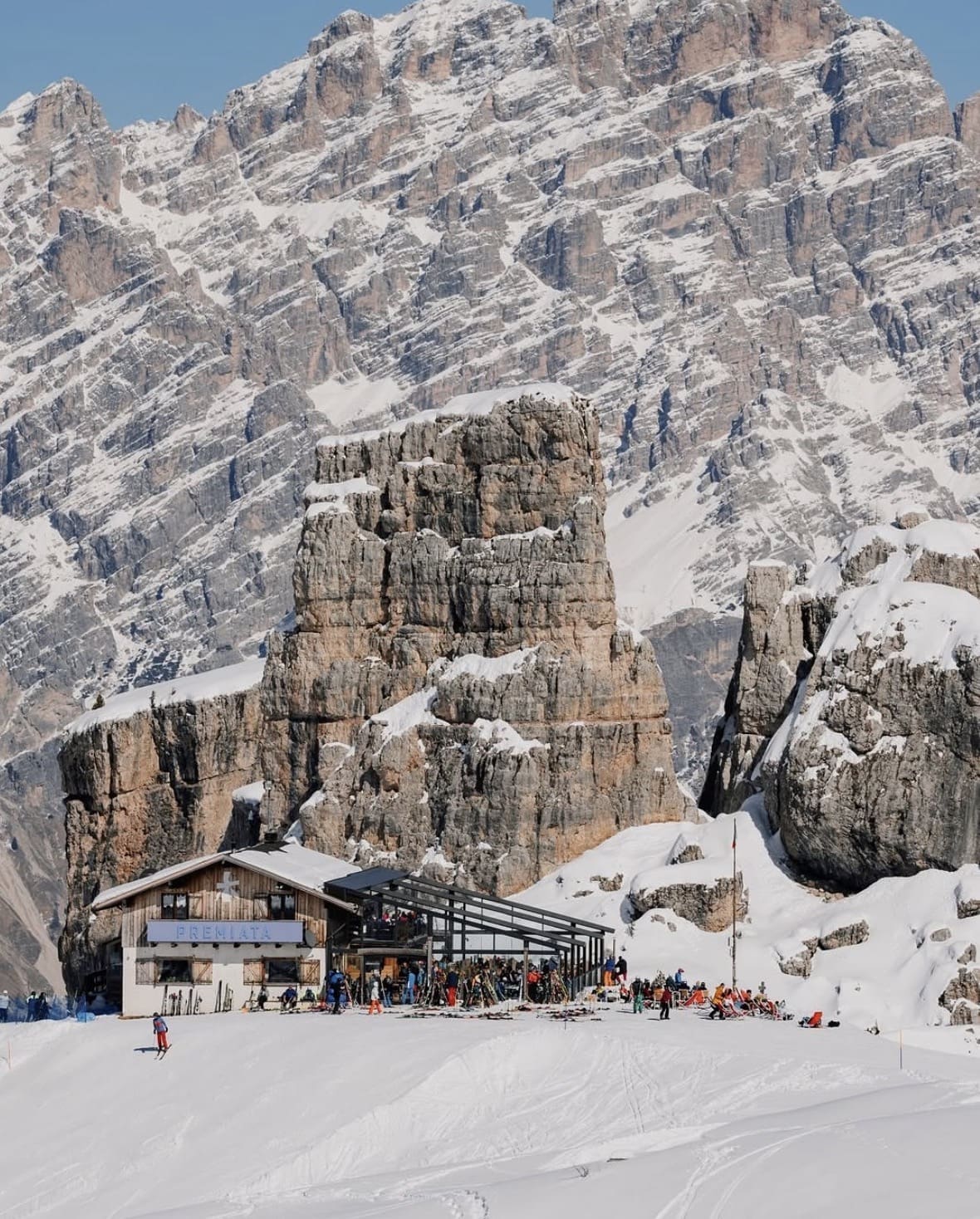
Image Credit: ALMANAK Magazine, Cortina d’Ampezzo and Dolomiti Superski
Address |
Cortina Tourist Office,
Corso Italia 81, 32043
Cortina d’Ampezzo (BL), Italy
phone | +39 0436 869086;
email | info@cortinamarketing.it
web | cortina.dolomiti.org
instagram | @cortinadolomiti